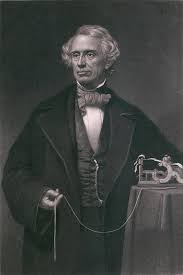
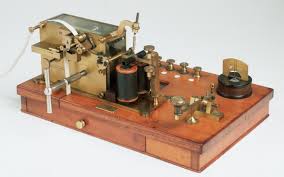
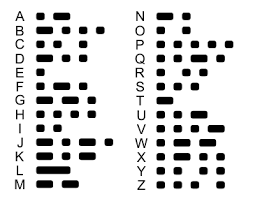
Samuel Morse, an artist and inventor, was struck by the inefficiency of traditional communication methods in the 1800s. Letters and human messengers could take days, if not weeks, to deliver messages across long distances. It was this frustration that led him to create the telegraph, a revolutionary machine that would change the course of communication history. Morse’s invention relied on the use of Morse code, a series of dots and dashes that represented letters and numbers. This code could be transmitted through a wire using a telegraph key, allowing operators to send and receive messages with incredible speed and accuracy.
The telegraph had a profound impact on society and commerce, transforming the way businesses operated and revolutionizing the world of communication. No longer were people bound by the slow pace of traditional communication methods. With the telegraph, they could send messages across vast distances in mere minutes, making it easier than ever to coordinate activities and stay connected. The telegraph was a game-changer, and its impact can still be felt today. Digital telegraphs were used rather than analog telegraphs for the simple reason that sometimes messages would be intercepted. Moreover, digital telegraphs are able to distinguish between noise and signal, whereas analog telegraphs are not able to do this
One of the main challenges of the telegraph was its high cost, required to operate a telegraph system was a significant investment.The telegraph was a marvel of engineering, with complex systems of wires, switches, and relays that allowed messages to be sent and received with incredible speed. Despite its initial limitations, the telegraph soon became an essential tool for global communication on a scale never before seen. However, with the advent of newer, more advanced technologies such as the telephone, the telegraph’s dominance began to wane. The telephone provided a more immediate and personal form of communication, rendering the telegraph obsolete for many users. Nonetheless, the telegraph remains a significant part of human history, playing a crucial role in shaping the modern world and connecting people across vast distances.